
A Complete Guide to Surfing Sagres in Portugal (2026)


This is my complete guide to surfing Sagres in Portugal.
Sagres sits right on the southwestern tip of the Algarve, often referred to as “the end of the world.”
And when you get there, it kind of feels like it.
It’s raw, exposed, and a bit more rugged than the rest of Portugal. Big cliffs, strong winds, open ocean in every direction. It doesn’t have the same polished feel as other surf towns like Ericeira or Cascais, but that’s part of the appeal.
I spent a week here at the end of my month-long surf trip around Portugal last summer, after a brief stop in Lagos.
And what I found is, if you’re coming to Sagres, you’re usually coming for one reason.
Surfing.
It’s a proper surf town. Less about beach clubs and restaurants, more about checking the conditions, heading out, and building your day around the water.
In this guide, I’ll break down how surfing in Sagres actually works. Where to surf, when to go, where to stay, and how I’d approach it if I was planning the trip again.
Is Sagres Good for Surfing?

Yes, Sagres is one of the best places to surf in Portugal.
What makes it work is how the coastline is set up.
You’ve got the west coast, where spots like Tonel and Beliche pick up straight Atlantic swell. This is where you’ll find the more powerful, consistent waves. It’s where most of the energy is, and where intermediate and advanced surfers will spend most of their time.
Then you’ve got the south coast, around places like Mareta.
This side is more sheltered, so when the west coast is too big or messy, you can usually find smaller, cleaner waves here. It’s the more forgiving option, and where beginners will feel much more comfortable on the right day.
That balance is what makes Sagres such a good place to surf.
You’ve got access to proper swell on the west coast, but also a backup when it gets too much.
How to Get to Sagres

Sagres is about 1 hour 20 minutes from Faro Airport, which is where most people will fly into.
From there, you’ve got a few options.
The easiest is to arrange a transfer through your accommodation.
Most surf camps and hostels in Sagres offer this, and it takes all the hassle out of getting there, especially if you’re arriving late or travelling with luggage.
You can also get there by public transport.
There’s a flixbus from Faro to Lagos, which takes around 1 hour 45 minutes, and then a second bus from Lagos to Sagres, which takes another 1 hour. It’s doable, but not the quickest option, and can be a bit of a hassle if you’ve got surfboards or a lot of bags.
The other option is to rent a car.
This gives you the most flexibility, both for getting to Sagres and for getting around once you’re there. It’s a straightforward drive, and worth considering if you’re planning to explore different surf spots during your trip.
When is the Best Time to Surf Sagres?

You can surf in Sagres year-round, but the experience changes depending on when you go.
If you’re a beginner, June to September is the easiest time to be here. The waves are generally smaller, especially on the south coast, and the weather is good. It’s a much more forgiving setup if you’re just starting out.
September to November is probably the best overall window.
You start to get more consistent swell, especially on the west coast, but without it getting too heavy. The weather is still warm, the water’s comfortable, and the crowds start to thin out. If you’re progressing, this is a really good time to be here.
December to February is when Sagres really picks up.
The west coast can get big and powerful, and while there are still more sheltered options, it’s generally better suited to intermediate and advanced surfers.
March to May is more mixed.
You can get some really good days, but it’s less consistent than autumn. That said, it’s quieter, and you’ve still got plenty of opportunities to surf.
The Best Surf Spots in Sagres
The coastline here is split between exposed west coast beaches and more sheltered south coast options, and each spot behaves quite differently depending on swell, wind, and tide.
Praia do Tonel

This is the main surf spot in Sagres and where you’ll probably end up most often.
It’s a west-facing beach, so it picks up consistent Atlantic swell. Waves here typically sit around 3–8 ft, but it can get bigger quickly when swell comes in.
What makes Tonel interesting is the mix of breaks.
There’s a beach break, but also sections breaking over rock, especially towards the northern end. When it’s working, you get clean, powerful waves with good shape, helped by offshore easterly winds.
It’s surfable at most levels on the right day, but it’s not a beginner spot all the time.
Praia da Mareta

This is the go-to beginner spot in Sagres.
It’s on the south coast and faces east, which means it’s protected from the dominant northwest winds. That usually translates into smaller, cleaner waves, typically around 2–5 ft.
It’s a standard beach break and much more forgiving than the west coast.
Praia do Beliche

Beliche sits just north of Tonel, tucked beneath the cliffs.
When the swell is right, you’ll get fast, hollow waves, often breaking quite close to shore. Wave size can range from 4–10 ft, and it can feel heavy.
It does get a bit of protection from the cliffs, so it can be cleaner than other west coast spots on windy days, but it’s still not an easy wave.
Best suited to more advanced surfers.
Praia do Amado
Amado is about 20–25 minutes from Sagres and one of the most reliable surf spots in the Algarve.
It’s west-facing, so it picks up swell consistently year-round, with waves usually in the 2–6 ft range, though it can get bigger.
What makes it good is the variety.
There are multiple peaks along the beach, with both lefts and rights, and you’ll often find smaller, more manageable waves closer to shore. That’s why a lot of surf schools tend to operate here.
Praia do Zavial

Zavial is one of the better-known south coast options outside of Sagres.
It can work really well when the wind is offshore from the northwest, producing clean waves. Conditions can range quite a bit, so sometimes it’s manageable, other times it’s more suited to intermediate surfers.
It’s a good alternative when Mareta isn’t working.
Where to Stay in Sagres
When it comes to where to stay in Sagres, it’s fairly simple. Most options fall into two categories: surf camps or hostels.
Surf Camps in Sagres

If you’re coming to Sagres to learn, or just don’t want to deal with the day-to-day logistics, surf camps make things a lot easier.
I stayed at Sagres Sun Stay, and it worked really well for what I was looking for.
By this point in my trip, I’d been staying in surf camps for almost the entire month I’d been in Portugal, so I was ready to step away from structured lessons and start doing my own thing a bit more.

I booked their 3-night surf package, which included one lesson. That was enough to get a feel for the local spots and how everything works, and then I switched to accommodation only so I could surf independently.


That flexibility is what made Sagres Sun Stay such a good option for me.


The setup is also very good. It’s more like a small complex than a typical hostel, with a pool, gym area, co-working space, kitchen, and plenty of space to hang out. I especially liked the co-working space, as I’m usually working while I travel.
The only downside is the location.
It’s about a 20-minute walk to Praia da Mareta and around 25 minutes to Tonel. I didn’t mind it, but it’s something to be aware of if you want to be right by the beach.
If you’re looking for something more structured, I’d go with Sagres Natura Surf Camp.
They run a 1-week surf camp package with daily coaching and a more progression-focused setup. They’re also better located, around a 10-minute walk from Mareta, which makes things a bit easier day to day.
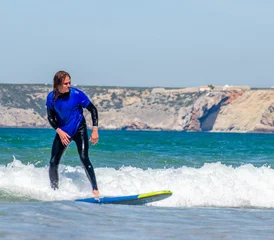
4 Day / 3 Night Unforgettable Surf Camp Experience in Sagres, Algarve, Portugal
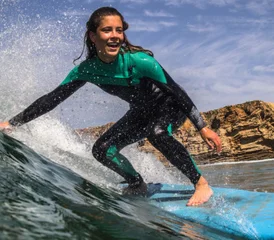
8 Day 7 Night Surf and Stay Package at Sagres Natura Surf Camp in Portugal
Surf Hostels in Sagres

If you don’t want the structure of a surf camp, hostels can be a really good option in Sagres.
Most of them are set up with surfers in mind, but they each do things slightly differently.
The Lighthouse Hostel is a good option if you want something a bit more polished. It’s well set up, with nice communal spaces and a more comfortable feel overall. It’s set slightly back from the main beaches, so you’ve got a bit of a walk, but it keeps things quieter and more relaxed.


Algarve Surf Hostel is the best option if being close to the beach is your priority. You’re within easy walking distance of the main surf spots, which makes day-to-day surfing really easy. It is one of the more expensive hostels in town, but you’re paying for that location.
Sagres Sun Stay is the cheapest option in Sagres, so a good choice if you’re on a budget. It’s also one of the most built-out, with a pool, gym, and co-working space. It’s set a bit further back from the beaches, but still very manageable on foot.
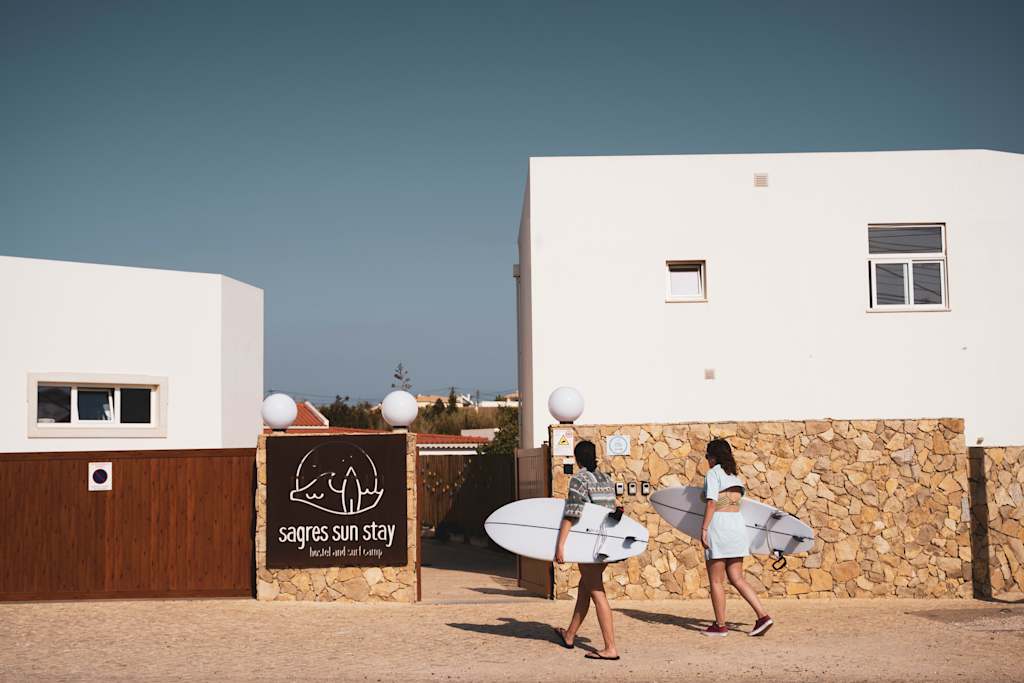
Sagres Sun Stay
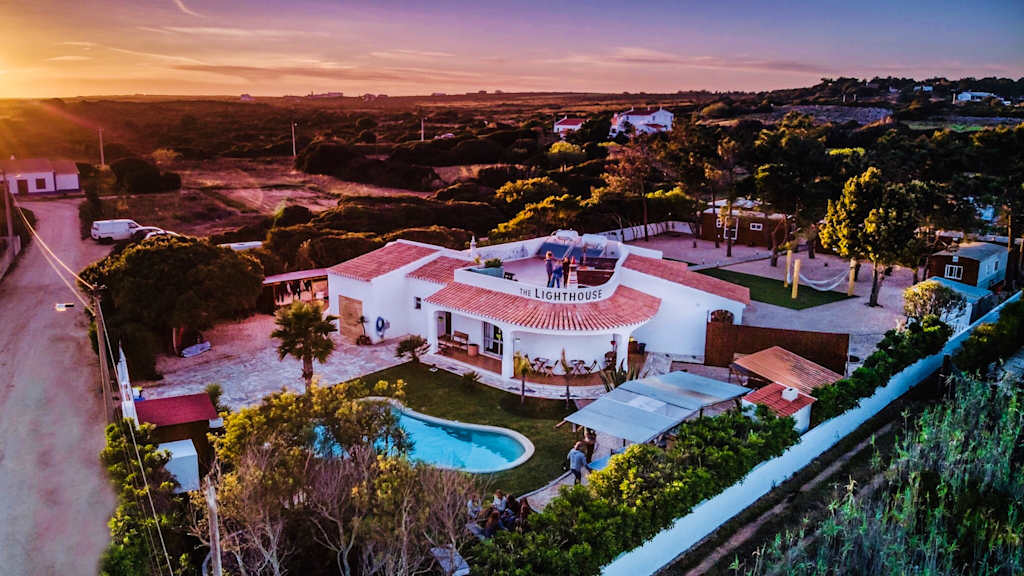
The Lighthouse Hostel Sagres
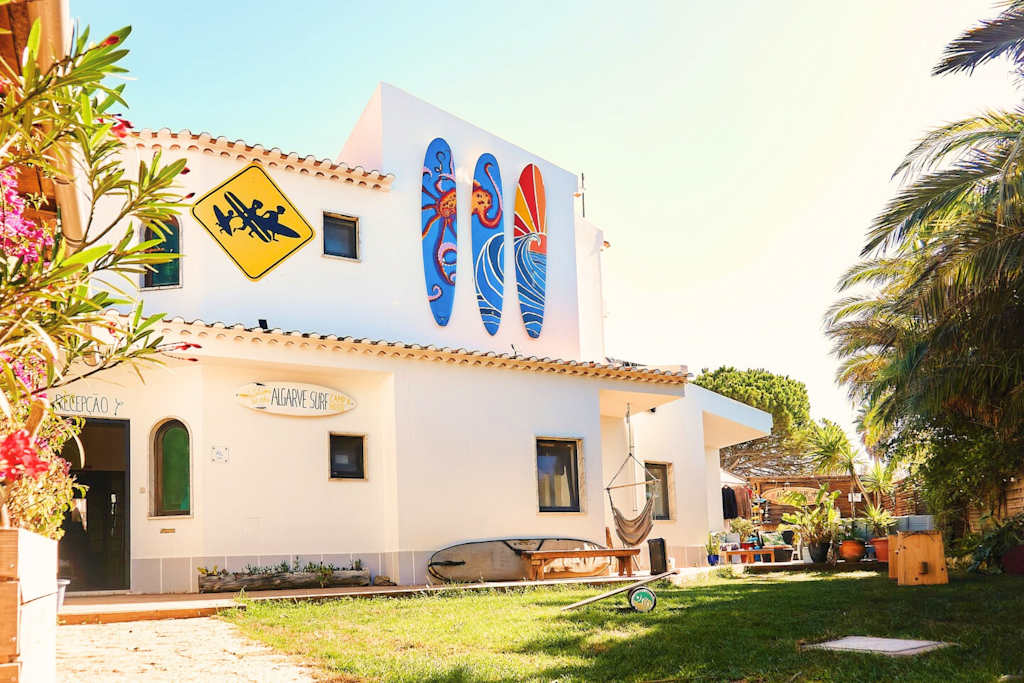
Algarve Surf Hostel
Surf Lessons in Sagres
If you’re not doing a surf camp, booking a surf lesson or two is a good idea, even if it’s just to get a better understanding of the local spots and what to look out for.
There are a few surf schools around Sagres, but not loads, so I do recommend booking lessons before you arrive.
One I’ve heard good things about is Sandy Surf School.
They run 2-hour group lessons for around €75 per person, and one of the main advantages is how flexible they are with location. Depending on the conditions, they’ll take you to either the west coast or the south coast, so you’re not stuck surfing somewhere that isn’t working.
If spots like Tonel or Mareta aren’t ideal, they’ll also take you further afield to make sure you get the most out of the session.

Surfboard Rental in Sagres
If you want to surf on your own, renting a board in Sagres is super straightforward.
You’ve got a mix of surf shops in town and right by the beach, so you can either organise something in advance or just sort it when you get there.
Places like Sagres Surf Shack, Surf Secret Society, and Sagres Natura Surf Shop all rent boards and wetsuits, and usually have a good range depending on your level.
In terms of price, you’re generally looking at around €15–€25 per day for a board, and about €5–€10 for a wetsuit, depending on what you go for.
A lot of the shops are close to the beaches, especially around Mareta, so you can often just turn up, see what looks good, and rent something there and then.
Travel Insurance for Surfing Sagres
This is one of those things that’s easy to skip, until you actually need it.
Even if you’re just learning, surfing comes with a bit of risk. Wipeouts, collisions, twisted ankles getting in and out of the water, it happens more often than you think. And when you’re travelling, even something minor can turn into a hassle quickly.
That’s why I always travel with insurance now, especially on surf trips.
I personally use SafetyWing. It’s designed for people travelling long-term or working remotely, which fits how I travel, and it’s really straightforward to set up. You can get covered quickly, extend it while you’re already abroad, and it covers the basics you actually need, like medical treatment, travel delays, and lost luggage.
Surfing Sagres
Thanks for reading my Complete 2026 guide to Surfing Sagres in Portugal, I hope it’s been genuinely useful.
If you’re still planning your trip, these guides will help:
- Best Surf Camps in the Algarve for Beginners (2026 Guide)
- Best Surf Hostels in the Algarve (2026 Guide)
- A Complete Guide to Surfing Portugal
